Slowness uses cookies to enhance the quality of our website. You can control how these cookies and similar technologies are used by adjusting your settings in My Preferences. To learn more about which cookies we use and how to edit your preferences, read our Cookie Policy.
PREFERENCES
Slow uses cookies to enhance the quality of our website. You can control how cookies and similar technologies are used on this website by making a selection below.
Save Preferences
Want to learn more about our people, places and projects? Sign up below to get our occasional newsletter.
Multimedia

Portraits

A Lifetime of Adventurous Listening: Frank Rübcke

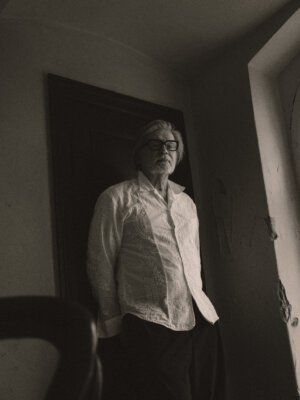
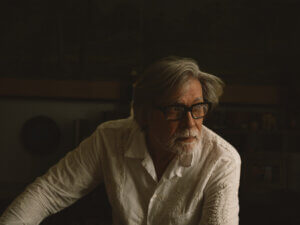
Across four decades in the archives and on the decks, Berlin-based music curator Frank Rübcke, known professionally as Octupone, has pursued the vast reaches of recorded sound. As Slowness’s resident music researcher, he presses that experience into continual exploration, mapping new musical territories and decanting each adventure of discovery into sets that transform atmosphere. Everywhere Slowness operates, his selections describe a spirit of place, setting the tone for moments of presence. His curation for Sounds of Slowness draws on his lifetime of listening to create a borderless collection of transportive sets. This portrait enters his world of collecting, research and intuition, following the currents that connect his selections across time and place.

  • Words Aurora Solá
  • Photography Clemens Poloczek

Across four decades in the archives and on the decks, Berlin-based music curator Frank Rübcke, known professionally as Octupone, has pursued the vast reaches of recorded sound. As Slowness’s resident music researcher, he presses that experience into continual exploration, mapping new musical territories and decanting each adventure of discovery into sets that transform atmosphere. Everywhere Slowness operates, his selections describe a spirit of place, setting the tone for moments of presence. His curation for Sounds of Slowness draws on his lifetime of listening to create a borderless collection of transportive sets. This portrait enters his world of collecting, research and intuition, following the currents that connect his selections across time and place.

  • Words Aurora Solá
  • Photography Clemens Poloczek
Mix 1 by OCTUPONE

1. Coral Skies Interlude, Celine Cairo
2. Scrolls, Laura Misch
3. Danny Boy, Tomii
4. Choix, ANIML
5. Dasos, Thomas Meleteas

Growing up in Hamburg, the seaport city where The Beatles once honed their craft through marathon sets at the Indra, Kaiserkeller and Star-Club, Rübcke’s childhood home was filled with books and records. His father, who worked for Philips Records, regularly brought home first pressings long before they entered general circulation. Black Sabbath, Jethro Tull and Nick Drake alongside shelves of jazz, progressive rock, beat music and R&B became the soundtrack of his childhood. At boarding school in southern Germany, he earned a reputation for arriving with homemade cassette compilations and introducing classmates to new discoveries, a habit he credits as “the beginning of getting stuck into music.”

Before music became his profession, Rübcke worked as a bookseller and waited tables by night while studying Japanese at university. His path later took him to Tokyo, where for six months he subsisted on bowls of miso soup. Back in Hamburg, his record collection grew rapidly around an early devotion to blues, R&B and funk, eventually leading to a Saturday night residency at the city’s celebrated Soul Kitchen. The brief was simple: “You could play everything, but it had to be between 1955 and 1976, nothing newer.” He still describes those years as “my grad school.” Around the same time came a split-second decision that would stay with him. Tired of being introduced as DJ Frank, he adopted the name Octupone, a riff on ‘octopole’, a physics term for an eightfold symmetrical field configuration.

Frank Rübcke

“A set must be like an opera. There’s the beginning, there’s a drama in the middle and there’s the ending.”

Mix 2 by OCTUPONE

1. Music Box, Ali Shaheed Muhammad
2. Love Interlude, Tasha
3. Karoola Seasons: IV. Winter, Emily Granger
4. Postludia: When The War is Over, Misha Kalinin, Roksana Smirnova
5. Kosemura: Life Is Friendship, Akira Kosemura
6. Gymnopédie No. 1: Lent et douloureux, Igor Levit

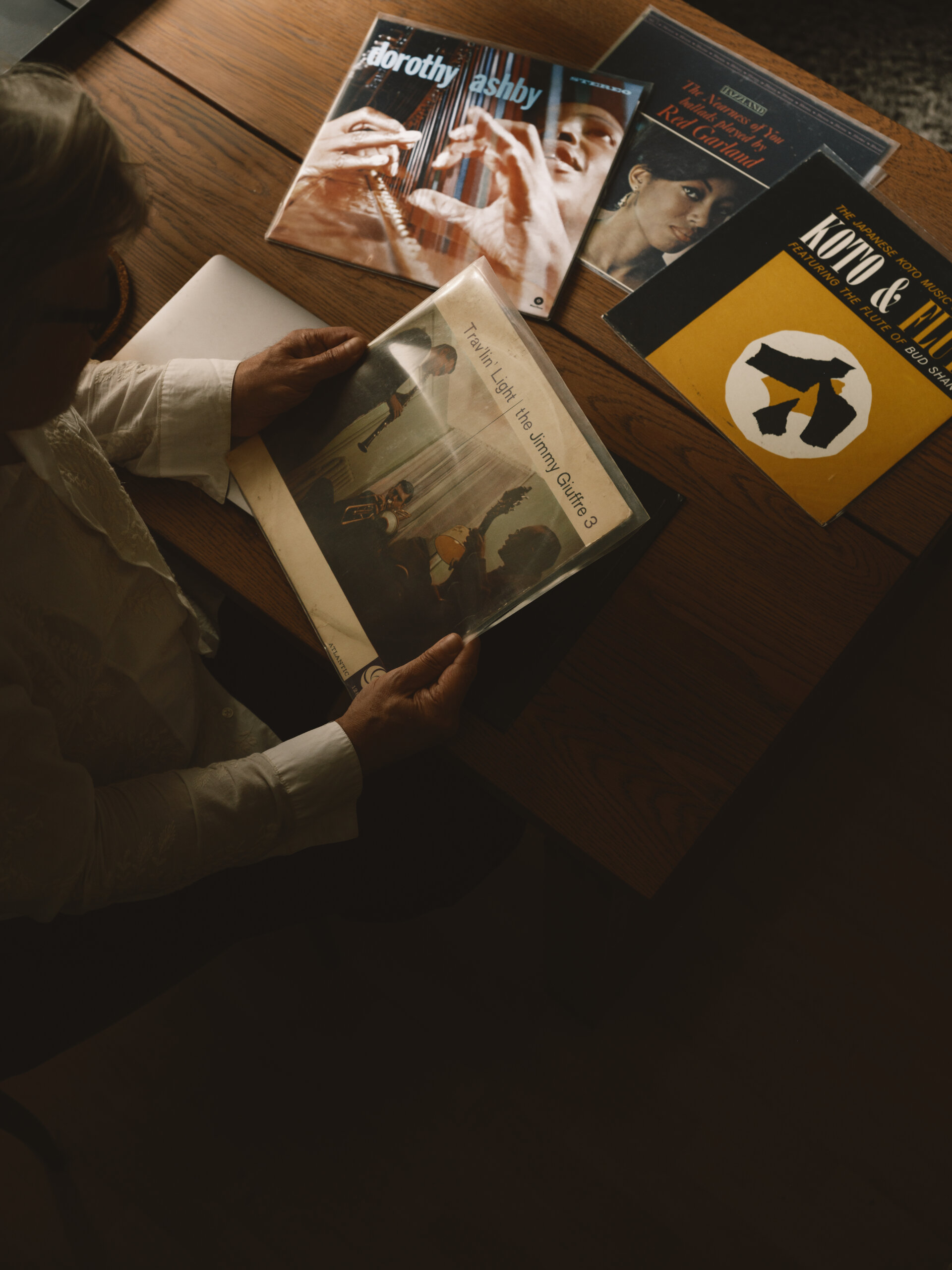
Rübcke’s selections move smoothly between genres, decades, continents and traditions: gospel and Georgian polyphony, Portuguese fado and Mexican bolero, Dixieland jazz and avant-garde Japanese pop. At play is an instinct for placing the right piece of music at the right moment. His own relationship with collecting has evolved just as dramatically. After moving to Berlin, he sold what he describes as his “huge” record collection of soul, R&B and jazz. “I thought it was over. I didn’t want to be a DJ any more. I had just moved to Berlin and needed space.” Digital files soon became his working archive, opening the door to an almost limitless stream of new music. The abundance still gives him pause. “In the old days, as a music collector, you got maybe 20 albums each month. Every day now, I get 74 new albums to hear.” But the easy old crinkle of vinyl has recently inched its way back into his life. “I have a little collection, just jazz from the fifties and sixties. It’s Sunday morning music for me now.”

For Rübcke, collecting and selecting are two sides of the same pursuit of completeness. “You have to be a nerd,” he says. Every mix begins with exhaustive research, searching for the strongest recordings, overlooked releases and unexpected connections. His sets tend to follow a familiar arc: “Intro, pianissimo, adagio, crescendo, sonata, outro. It must be like an opera. There’s the beginning, there’s a drama in the middle and there’s the ending.” Even when building a classical selection, familiar masterpieces give way to chamber works, modern composition and film scores, assembled into a sequence that creates its own world. As he puts it, “I pick what works.” What works, however, cannot be reduced to method. “I’m doing it in my own style. It’s an instinct,” he says. “There is no master plan.” Technique can be learned, he believes, while taste cannot. It develops through years of listening, collecting and remaining receptive to surprise. That curiosity continues to define his approach. “Even after all this time, there’s always something new to discover. I still feel like an amateur.”

Frank Rübcke

“Even after all this time, there’s always something new to discover. I still feel like an amateur.”

Contact
FLUSSBAD
Zur Alten Flussbadeanstalt 1
10317 Berlin, Germany
Website by Studio Airport