AS It reminds me of something Pauline Oliveros wrote, that quantum listening is attention to a point, an all-or-nothing focus that then changes that point forever. And it changes you along with that point. That intensity of attention can create a deep anchor in memory. Is the purpose for you in drawing from such deep places purely artistic or is there some other aim that goes beyond art for you in these practices?
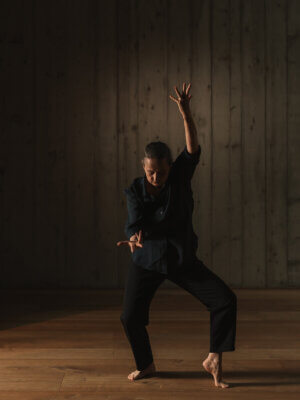
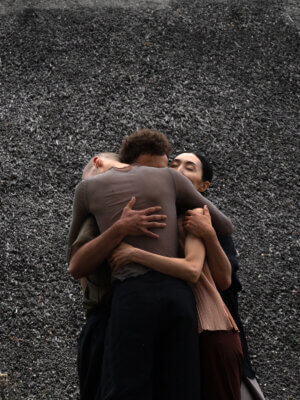
SW That’s an interesting question, and it was always a question for Mary Starks Whitehouse. She didn’t know which world she belonged to. I think there is no reason to even divide the two, because all art can be healing and some of the healing practices can become art. So I’m trying not to position myself either way. The process does have a very transformative feeling to it. We always feel it when we enter into the space, truly. And I mean, the group is not even. There are people that have less experience in the practice, and there are people that have a lot of experience in the practice, and there are people that are younger and there are people that are older. It’s also a generational piece in a certain way, which for me is important. I enjoy experienced dancers so much, with all the knowledge of the body and of life that is talking through them. That is very touching for me, particularly in this practice. At the same time, it’s beautiful to have the energy of a younger dancer, with the urgency to move and discover. They each bring different qualities to the evening.
AS I’ve heard you refer to this as a ritual, which is also a word that some of these women have used. I’m curious about what ritual means to you and how you’ve come to recognize and cultivate this form in your life.
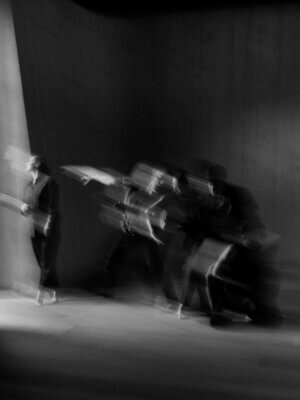
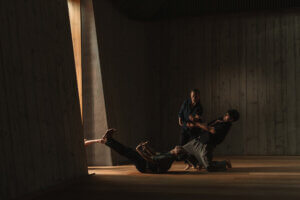
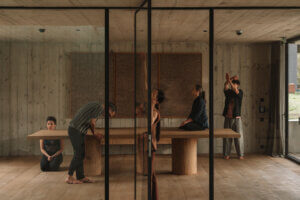
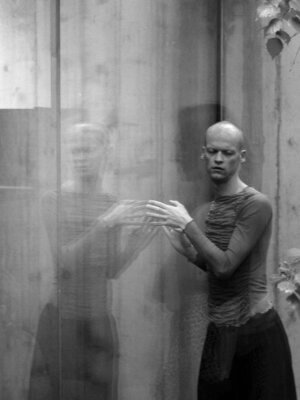
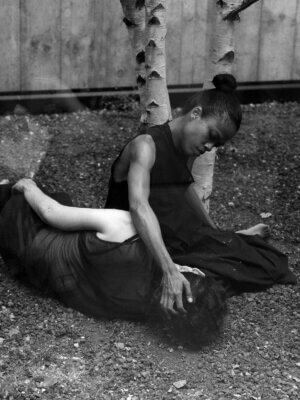
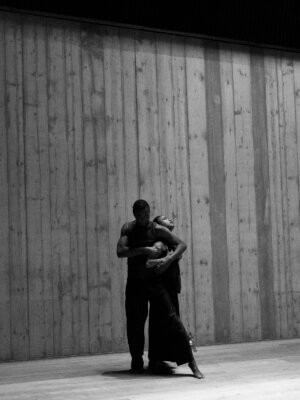
SW There are aspects of the practice that feel very ritualistic in the way that archetypal experiences can come up. We experienced it a lot in the collective practice. The music helps us get into another state together, so that it really feels like we are traveling somewhere, and we never really know where it is going. I cannot explain it, but we have had really strong experiences with that. We have also tried to find ways for it to become a personal ritual. How can I enter into the state? What are my methods? I mean, we have been practicing the method for a long time. We went into the studio every day to practice together. It was really intense. We had a break after the premiere and further performances, and now we have come back together for Reethaus, and we really felt, wow, how much we missed it, you know? And here we are again together in another space.
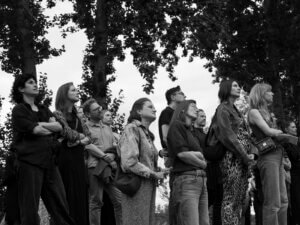
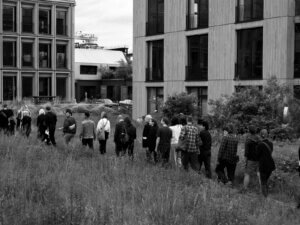
AS Showing up every day to do the exercises together, that is a devotional practice all on its own. Your partner Jochen Sandig said that one of things you would be listening for here, besides other people, the birds, the trees, the architecture, is the concept of slowness. Can you say more about that?
SW When you slow down, your awareness heightens. It is much harder when everything is racing to be conscious. The space invites that. But we also want dramaturgy, so I’m not excluding energy and dynamic outbursts. I’m not saying everything has to be slow. That wouldn’t be truthful to what might appear. What appears appears. But the practice itself has a slowness to it, which sets a tone.